 TokuGo
12 chapters, 122 lessons
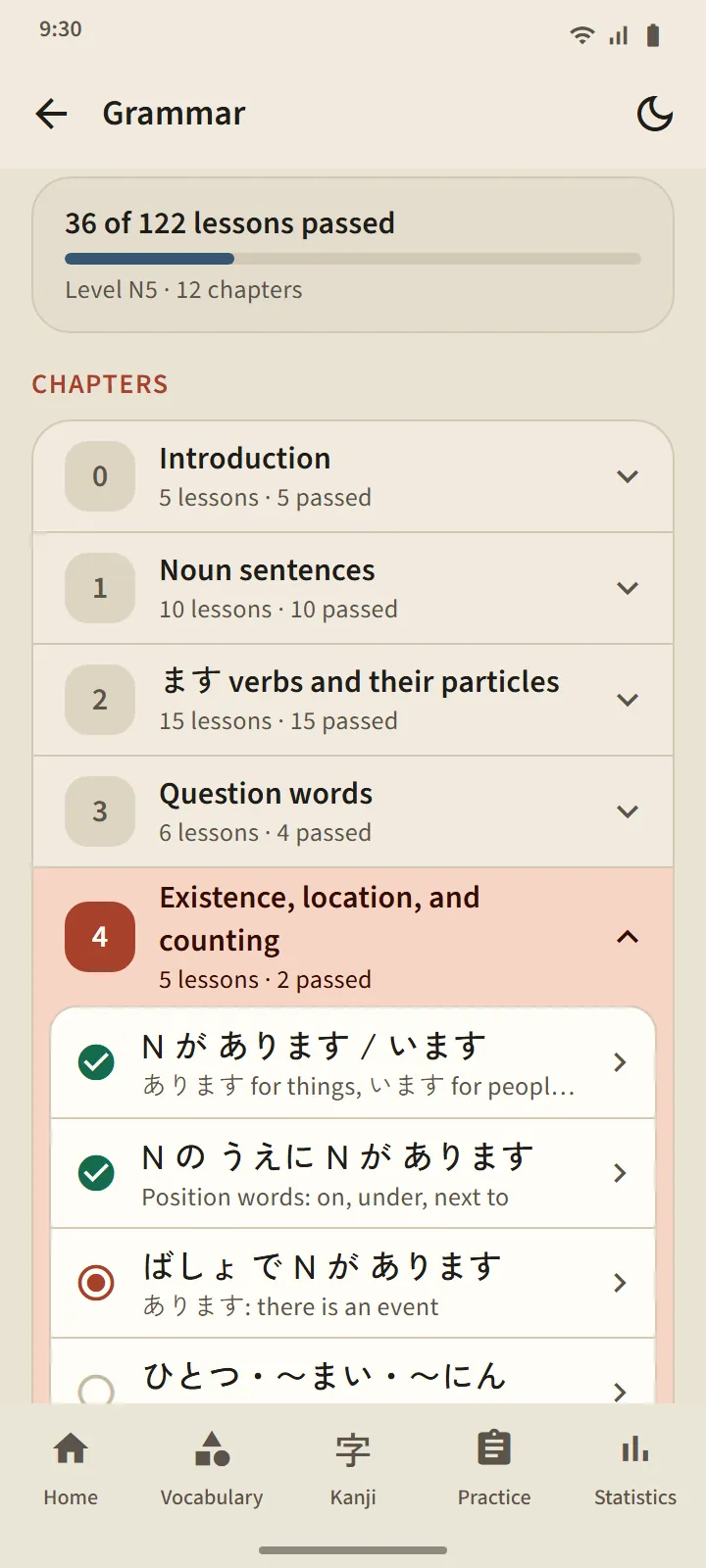
The Grammar page opens from the "Japanese basics" section of the home screen. Chapters expand in place, one at a time, and each lesson is marked not opened, read, or practice passed. The syllabus was built so that every pattern that appears in the N5 practice exam sets has a lesson.
| Chapter | Contents |
|---|---|
| 0 | Introduction |
| 1 | Noun sentences |
| 2 | ます verbs and their particles |
| 3 | Question words |
| 4 | Existence, location, and counting |
| 5 | Adjectives, likes, and wants |
| 6 | Comparison |
| 7 | Inviting, offering, choosing |
| 8 | The て form |
| 9 | The ない, dictionary, and た forms |
| 10 | Joining sentences |
| 11 | Conversational expressions |
The shape of a lesson
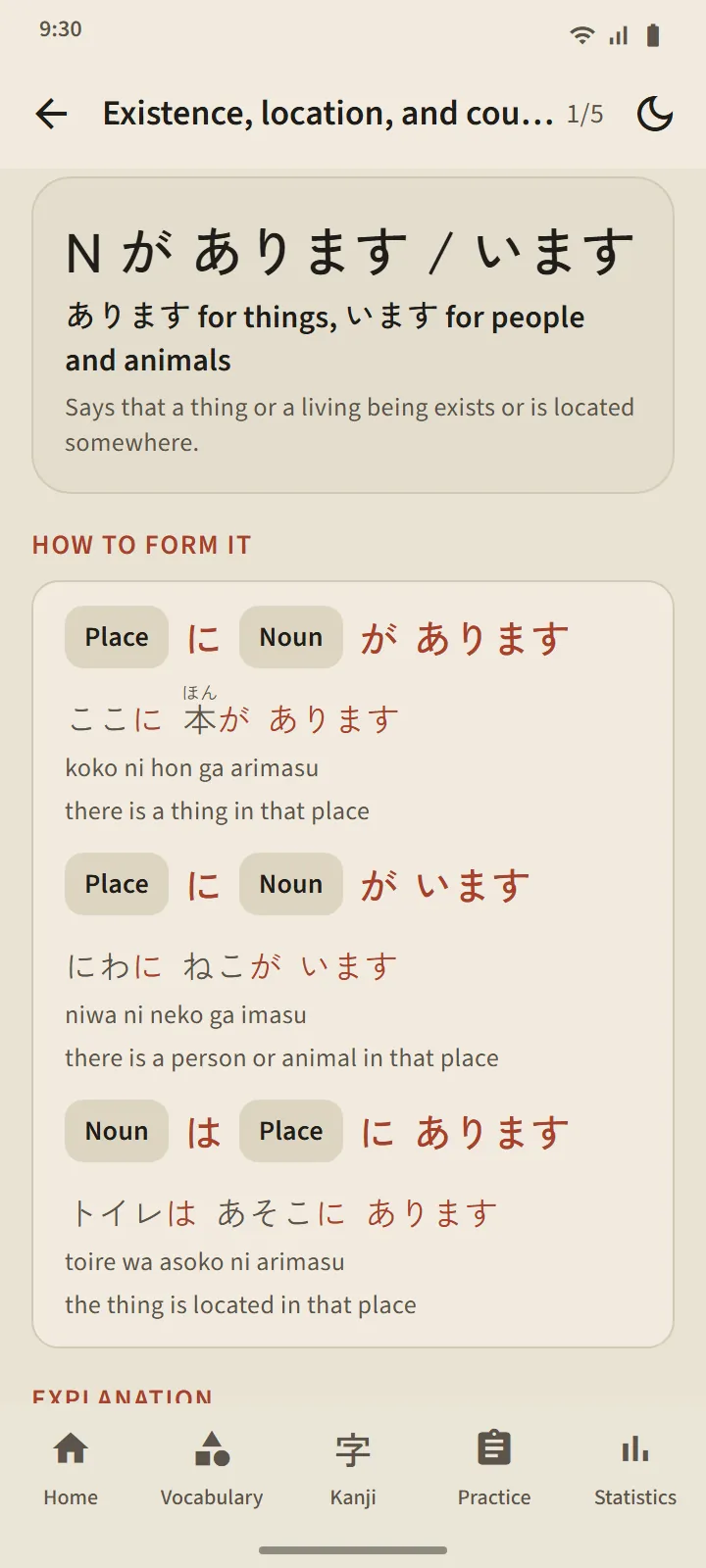
Every lesson follows the same layout: the pattern and its meaning, How to form it (the formula, with example words), Notes, Examples with furigana you can listen to, and Don't confuse with for similar patterns. Japanese sentences only wrap between phrases so they stay readable on small phones.
Practice with explanations
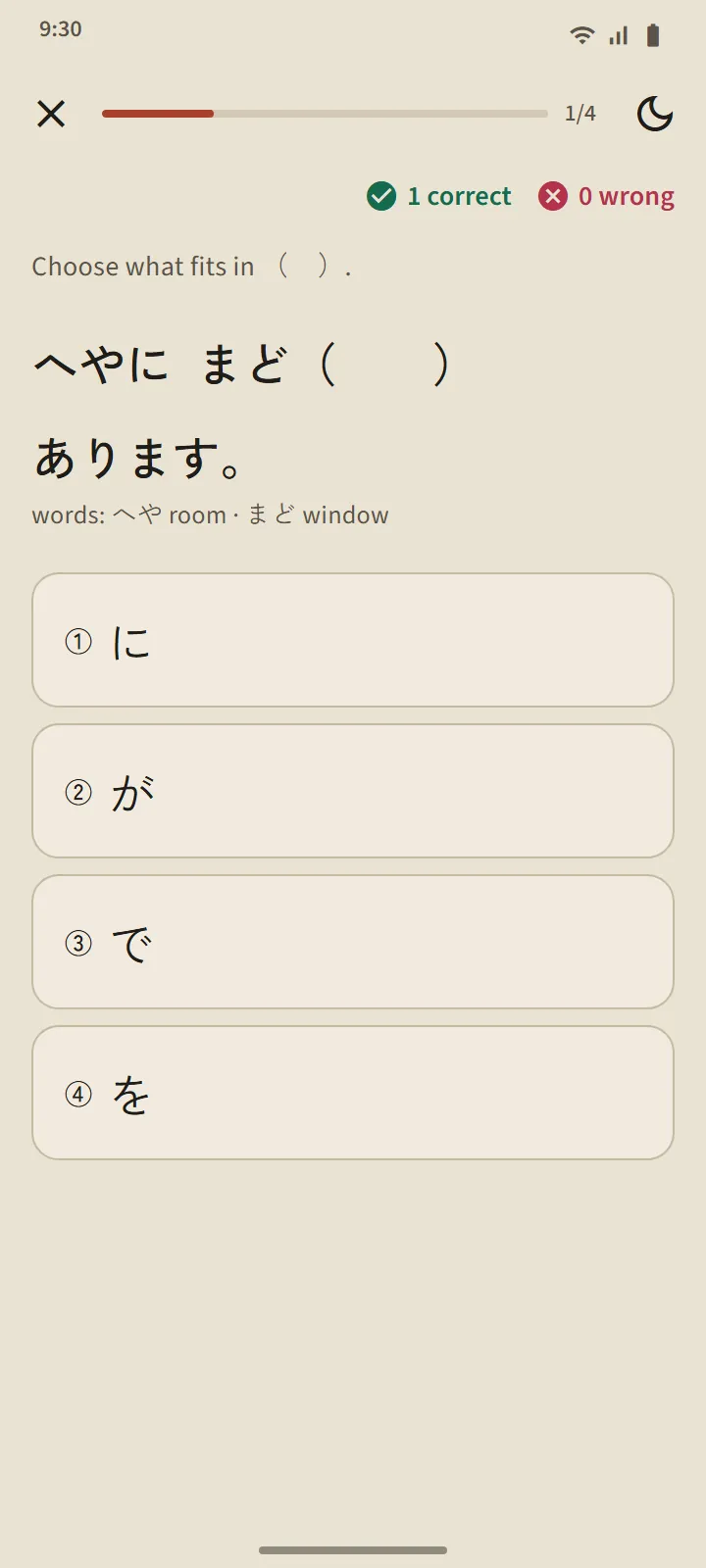
The button at the bottom of a lesson opens a practice of three to five questions. Each answer comes with an explanation; a lesson counts as passed with at most one wrong answer, and unpassed ones can be repeated. Results are recorded on the Grammar page and in the Statistics tab.
In your language
Notes, example meanings, answer choices and explanations are available in 12 languages: English, Indonesian, Vietnamese, Burmese, Nepali, Thai, Sinhala, Filipino, Hindi, Bengali, Mongolian and Khmer. The Japanese sentences, formulas and answer keys are the same in every language. Lessons were written for TokuGo and then audited; open sources were used only for cross-checking.